Atradius Atrium
Get direct access to your policy information, credit limit application tools and insights.

 United Kingdom
 Australia
 Austria
 Belgium
 Brazil
 Bulgaria
 Canada
 China
China
 Czech Republic
 Denmark
 Finland
 France
 Germany
 Greece
 Group
Group
 Hong Kong SAR
 Hungary
 India
India
 Ireland
 Italy
Italy
 Japan
Japan
 Lithuania
 Mexico
 Netherlands
 New Zealand
 Norway
 Poland
 Portugal
 Romania
 Singapore
 Slovakia
 Slovenia
 Spain
Spain
 Sweden
 Switzerland
 Turkey
 United Arab Emirates
United Kingdom
United Arab Emirates
United Kingdom
 United States
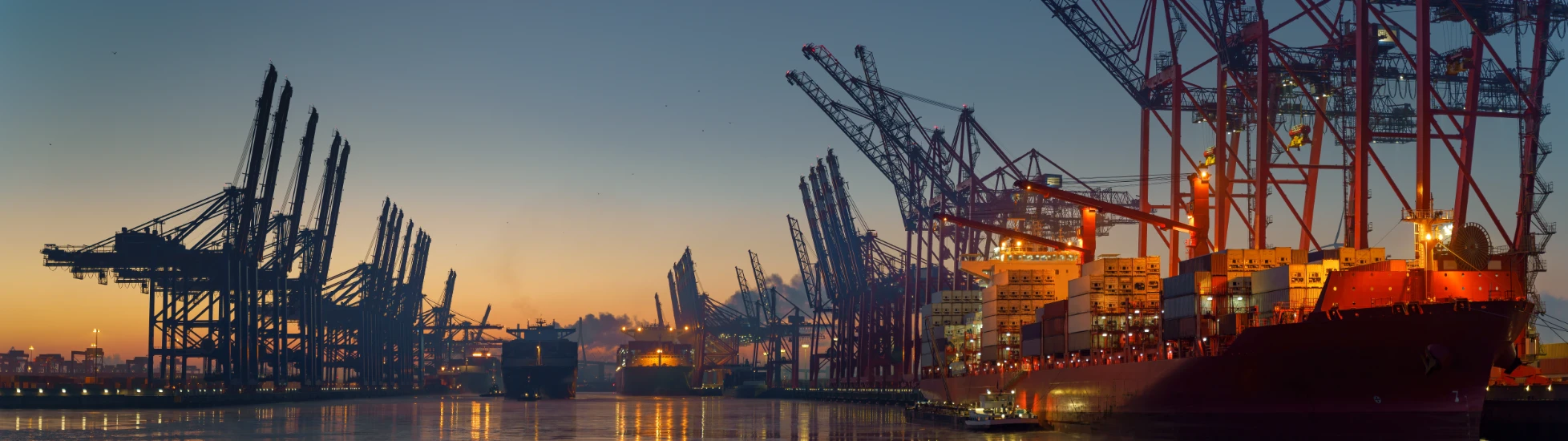
The year started with another sharp taste of geopolitical uncertainty. The US administration’s surprise actions in Venezuela were quickly followed by renewed rhetoric regarding Greenland.
.2026-01-26-09-06-22.jpg)
At the same time, the war in Ukraine continues with no clear path to resolution, while the risk of further Russian aggression against Europe is being taken increasingly seriously.
In addition, tensions in the Middle East remain high, while the threat of escalating frictions between the US and China adds strain to global trade and supply chains.
This all shows how geopolitical risk is a growing supply chain threat in 2026 as the global operating environment becomes more volatile and less predictable.
For UK businesses, this environment makes long-term planning more difficult. It raises the risk of sudden cost increases, supplier disruption or forced changes to sourcing strategies.
In 2026, companies that lack flexibility or rely heavily on politically exposed regions may find their supply chains more vulnerable to shocks beyond their control.
Uncertainty around trade tariffs is likely to continue into 2026.
In the US, the Supreme Court will soon rule on the legality of President Donald Trump’s use of emergency powers to impose higher tariffs on trading partners. If the Court rules against his current levies, reports suggest the president will launch new tariffs based on alternative legislation.
For UK companies, this could prolong trade uncertainty with the US. Even if existing tariffs are struck down, a replacement framework could increase costs, disrupt pricing and sourcing strategies. That could make it harder for UK exporters and import-reliant firms to plan investment, contracts and supply chains tied to the US market. The recent threat of raised US tariffs linked to the UK Government’s stance on Greenland further complicates matters.

Meanwhile, partly in reaction to US tariffs, other countries are pursuing new trade deals and forms of partnership. This includes EU free-trade agreements and closer integration within Asia.
Companies may be pushed by tariff uncertainty and volatility to reassess global supply chains, manufacturing and investment plans.
In recent years, there’s been a significant increase in the number of cyber-attacks resulting from vulnerabilities within the supply chain. These attacks can result in devastating, expensive and long-term ramifications for companies, their supply chains and their customers.
Despite these risks, many companies lose sight of their supply chains. The interconnected and distributed nature of a supply chain can make it difficult to know how your suppliers are managing and maintaining their cyber security.

An example came in August 2025, when Jaguar Land Rover (JLR) suffered a major cyber incident that forced production to halt at its key UK plants. The breach reportedly originated from a compromised account at a third-party supplier, allowing hackers to access JLR’s operational technology and production systems.
Companies may find themselves under pressure from supply chain partners to ensure they meet baseline cyber security standards.
In January, the EU started charging a carbon tax at the border under its Carbon Border Adjustment Mechanism (CBAM).

For UK companies sending higher-carbon goods – among them, iron, steel, aluminium, cement, fertilisers or hydrogen – to the EU, this creates a new supply chain risk. EU buyers now have to pay for the carbon emissions linked to these products, and they are likely to pass those costs back to UK suppliers.
This risks making higher-carbon UK goods more expensive than lower-carbon alternatives, or those made in the EU.
On top of this, emissions data for these goods must be independently verified. UK firms that cannot provide accurate, audited carbon figures risk being dropped by their EU customers.
The EU CBAM creates a new supply chain risk – and greater costs – for some UK exporters of higher-carbon goods.
Persistent gaps in roles such as HGV drivers, warehouse supervisors, maintenance engineers - to name but a few - is likely to remain a significant supply chain risk for many businesses in 2026. This is particularly true for UK businesses operating in logistics, manufacturing and infrastructure-dependent sectors.
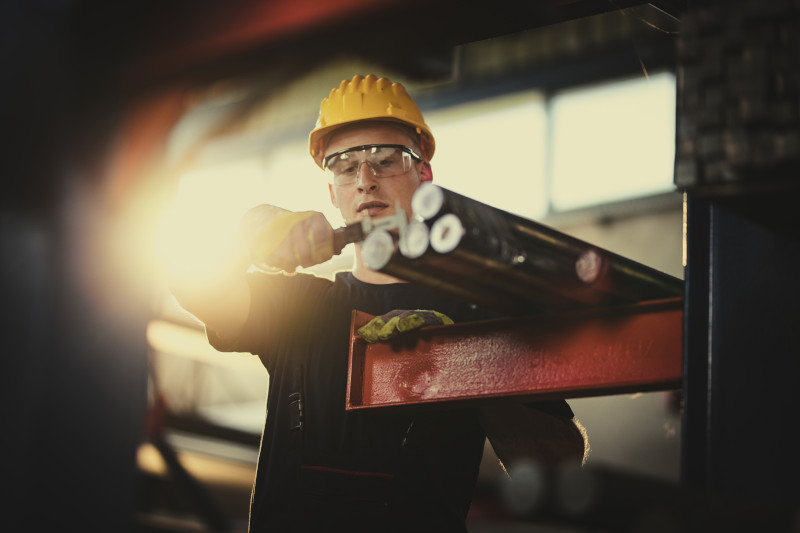
An ageing workforce and slow uptake of vocational training mean that even when demand is stable, companies may struggle to staff critical operations. These shortages can lead to delays, bring down quality, and risk more mistakes in warehousing, transport and production.
A lack of quality, skilled staff also make supply chains more fragile if and when there is disruption. Without enough experienced staff, businesses are less able to absorb shocks or ramp up output at short notice.
Companies that rely heavily on a small number of key individuals or subcontractors put themselves at particular risk. What happens when those workers leave or retire? This could have knock-on effects for customers and partners.
A reliance on a small pool of skilled staff at one organisation can have impacts that ricochet down supply chains, especially during disruptions of crises.
In sum, geopolitical shocks, trade uncertainty, cyber threats, regulatory change and a lack of skilled labour are all likely to remain supply chain challenges in 2026. In this environment, resilience, visibility and adaptability will be key.
Want to learn more?